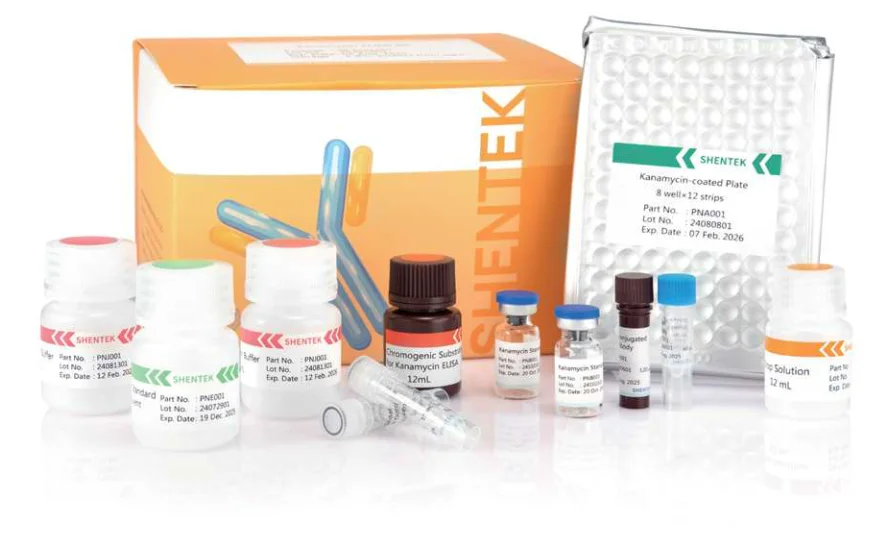
These are the kits and instruments needed for release testing and in-process control, and services that carry out tests that are difficult to run yourself. From residual host cell DNA and RNA, HCP, mycoplasma and adventitious agents to lenti-, retro- and AAV vector safety and recombinant endotoxin testing, we provide validation documentation aligned with regulatory standards (USP·EP·ChP).
These are the criteria to look at when choosing a product for your application, and the information that is helpful to share when you contact us. Specifications and options list only what has been confirmed.

Dedicated to biopharmaceutical QC — from residual DNA and HCP to adventitious agents and vector safety

A CRO dedicated to biosafety testing — from ICH Q5A(R2) viral clearance studies to safety testing
A viral clearance study demonstrates experimentally how much a manufacturing process reduces viruses. Based on ICH Q5A(R2), revised in 2023, this guide summarizes the items to check at the planning stage: selecting model viruses and scaled-down models, preliminary testing, the rules for adding up reduction values, and a design matched to the development stage.
Read ›Mycoplasma testing starts with deciding between the compendial culture methods (the agar and broth culture method and the indicator cell culture method) and nucleic acid amplification techniques (NAT). Based on public sources, this guide summarizes what each method detects, the time to result, the requirements of the revised Ph. Eur. 2.6.7, in effect since 1 April 2026, and of the USP, and the points to consider when choosing a test method.
Read ›A bacterial endotoxins test (BET) result can be trusted only when the choice of technique, the endotoxin limit and maximum valid dilution, the test for interfering factors and formulation-related low recovery are considered together. Recent changes, such as new chapters for recombinant reagents and the removal of the rabbit pyrogen test from the European Pharmacopoeia, are summarized from public sources.
Read ›Based on the original documents, this guide explains which documents recommend "10 ng/dose" and "approximately 200 bp" for residual host cell DNA and with what scope, and why there is no uniform numerical limit for host cell protein (HCP). It also covers what to check when choosing qPCR and ELISA test methods.
Read ›Tell us your process stage and the product lines you need, and our technical specialists will respond quickly. TEL +82-2-6409-9338 · info@b2bio.co.kr